
1in8b Life
1 in 8 Billion
What Is 1 in 8 Billion?
The 1 in 8 billion life you are dealt in 1 in 8 Billion, a free browser life simulation game built by Jin's Earth, starts with a button press: a person appears somewhere in the world with a country, a sex and a household income drawn from published statistics, and you follow that person to the end. Everything runs on 1in8b.life, which the developers describe as the only official address. 1in8b Life does not host or mirror it, and the player slot at the top of this page stays empty on purpose.
No portraits, no soundtrack, nothing to walk around in. What you get instead is text, four numbers and a column of years that keeps growing.
Most games in this genre hand you a talent roll and let you beat the odds. 1 in 8 Billion starts from the odds and asks how far a person can move inside them. Narrower promise, better question.
Release Date, Developer and Version
- Full name
- 1 in 8 Billion, shortened to 1in8b
- Developer
- Jin's Earth, the studio of independent developer Jin Hwi-eus
- Released
- 2026-10-05, still in beta
- Current build
- v0.8.24 beta, as displayed on the official site
- Genre
- Life simulation, also tagged EducationalApplication in the official structured data
- Price
- Free, with no ads and no account; a $3 keepsake pass adds digital keepsakes
- Languages
- 12, shown as 13 entries because Simplified and Traditional Chinese are listed separately
- Platforms
- Desktop and mobile browsers; no app store build
- Published rating
- None. No store or portal gives it a score
Before You Are Born, You Choose Exactly Four Things
The settings screen is smaller than the name suggests. You set the era, the basis for the draw, the length of a run and, if you want one, a comparison country. Era covers today, any single year from 1950 to 2025, the future, or a fourth option the site calls any world. The draw can follow the annual number of births or the 8 billion people already alive. Runs last 30, 60 or 90 minutes. The comparison country is optional and stays local.
Nationality, sex and household income are not on the list. The official explanation is blunt: nobody chooses their birth, so the game does not pretend otherwise. Anyone hoping for a born in another country game where you pick the passport will find the opposite here.
Era is more than a filter. Pick a past year and that year's wars and famines join the event pool; pick the future and the character is born now, then carried forward on projections. The draw basis matters more than it looks. Weighting by annual births concentrates outcomes where the most babies are born, and the official share graphic puts India at 17.6 percent, China at 6.7 and Nigeria at 5.7. Switching to current population spreads that differently without giving anyone a choice of passport.
Three of the four settings describe the simulation rather than the person. That is a deliberate and slightly cold design, and 1in8b Life reads it as the honest part of how the game works.
One Year at a Time: Pick a Focus, Then Answer the Prompt
Once the draw lands, the run settles into a yearly rhythm. Each year asks where to put the emphasis, on study, work, family or health, and that choice nudges the events and the four bars. At certain ages the game stops for something larger: keep studying or leave, which job to take, whether to marry, move country, see a doctor, or put a parent in a care home.
The options change probabilities rather than outcomes. The official line is that choices change the odds but never settle the ending, and the birth country stays visible in the results for the whole run. A good decision in a weak starting position can still end badly.
The interface splits into three columns. The left carries name, sex, residence, the four bars and net worth. The middle is the year-by-year ledger. The right holds family, plus the four other babies born at the same second, each running a parallel life the game keeps advancing.
Those four strangers do more work than any bar. A number on a screen means little; a neighbour born on the same second with a different outcome means something. 1in8b Life builds the next section on that gap.
What Each of the Four Bars Actually Controls
Health
Death risk and the ability to keep working both hang on this bar. Exercise, checkups and self-care push it up, and age pulls it down. It is the one number that can end the run early, which makes it the closest thing the game has to a fail state, and a long life usually means spending the early years on it.
Happiness
Life satisfaction, shaped by income, family and friends, health and debt. It rarely moves on its own. Debt counts against it, so a raise that arrives with a large loan does not automatically lift the bar, and this is the number that most clearly shows how much the draw is still steering.
Knowledge
Exams, job offers and starting salary all read from this. Family circumstances and the national school system weigh more, and gains flatten past roughly 70, so late study pays less than the same effort at 15. The cap is the detail worth knowing before you spend a decade on study.
Relationships
Marriage and marital trouble, how children talk to you, and the odds of being bullied at school. This is the bar with the longest gap between cause and effect: a choice at 15 can surface at 45. Nothing on the screen shows that delay while it is happening.
Difficulty, Pace and a Game With No Way to Win
None of the four bars produces a score. There is no win state, no ranking, no ending to unlock, and no way to reroll a birth that went badly. Difficulty comes from the statistics: the harder you push for a long, healthy, well-paid life, the more the starting country shows up as a ceiling.
Pace is adjustable. You can pause, run from 1 to 16 times speed, or hand the choices to an automatic mode and watch. At 5, 15, 30, 50 and 70 the clock stops for one question about the life so far, framed so that you compare it with your own life.
Death is drawn, not written. Age at death comes from the country's sex-specific life table, year by year, and cause from WHO and Global Burden of Disease regional and age patterns. Infant deaths and long lives both happen because the distributions allow both.
Removing the reroll is the spine of the design. A bad draw becomes an argument with reality instead of a reason to restart, though anyone who enjoys optimising a build will find little to optimise. One press account puts completion at 58 percent of started lives; the official site publishes no retention figure. 1in8b Life repeats that number without endorsing it.
Phones, Classrooms and Twelve Languages
None of this needs a computer, and there is no app. Phone users are pointed at the browser's add to home screen option, with settings tucked behind the ⋯ menu at the top. A 1 in 8 billion life lives in the browser's own storage rather than in an account, so carrying one to another device takes the move code described further down. No compatibility list for specific handsets or mobile browsers has been published.
A classroom mode sits behind ?edu=1 on the address. It tones down the heavier material, switches off sharing and publishing, and closes the paid pass. For a game that assigns infant mortality and illness at real rates, that switch is not decoration.
The language count in the official material disagrees with the menu. The About page claims twelve languages. The switcher lists thirteen entries, because Simplified and Traditional Chinese are counted apart. The rest are English, Korean, Japanese, Vietnamese, French, Thai, Spanish, German, Portuguese, Russian and Turkish. Both numbers are right under their own definition; the gap is a counting convention, not a missing translation.
For a text-only game the home screen route is enough. The classroom switch is the feature 1in8b Life would put in front of a teacher first, since it changes what the game is willing to show a class.
Life Cards, the Memorial Wall and the Keepsake Pass
Every run ends the same way, with a death record, and the record can become a share card through the system share sheet, X or Threads, or be saved as an image. Shared lives collects anonymous lives that players post, without names or contact details. The memorial wall lets anyone light a candle and leave one of a few preset lines.
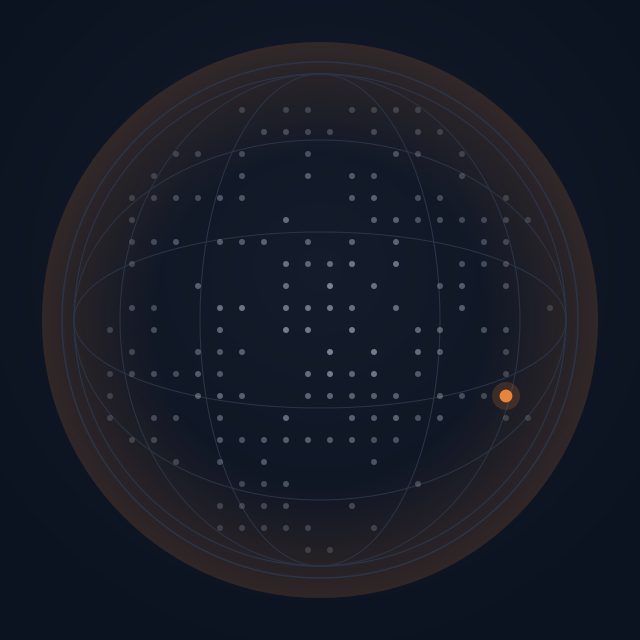
Saves live in the browser. The last ten lives stay on that device, and moving to another one needs a code from Move my lives. The official home page runs a dot-matrix world map beside a Where they live now list, showing which countries the lives in progress are spread across, with counts that move.
The money line is drawn with unusual care. A life from birth to death costs nothing, and the single purchase is a $3 keepsake pass that turns a finished life into a video, an album or a year-by-year book and opens the memorial wall. Refunds are unconditional within 30 days and the pass is not sold in Korea. Paying changes nothing about the draw.
Three dollars for an artefact rather than an advantage is a clean split, and it is why the free tier does not read as a demo. That split is the clearest thing 1in8b Life can say about the price.
1 in 8 Billion FAQ
Is 1 in 8 Billion free to play?
Yes. A full life costs nothing, with no ads and no account. The only paid item is the $3 keepsake pass, which adds digital keepsakes and the memorial wall and is refundable within 30 days. 1in8b Life lists no other paid tier.
Do I need to download it or create an account?
Neither. The game is a single web page, and most life simulator online titles ask for an account before the first year; this one does not. Saves sit in browser local storage.
Is 1in8b.life the official site?
The About page names 1in8b.life as the only official address and lists 1in8bn.com, 1in8billion.app, 1in8b.app, 1in8b.live, 1in8b.net and in8b.com as unrelated. One of those, 1in8b.app, is a separate build with logins and a $3.99 pack.
How long does one life take?
The settings offer 30, 60 or 90 minutes at normal speed, and a run can be paused or pushed to 16 times speed. One Chinese outlet timed a full life at about ten minutes at maximum speed, roughly three seconds per year.
Can I choose the country I am born in?
No. The draw follows annual births or current population, so populous countries come up far more often. The one country field you can fill is your own birth country, used only for comparison and stored on your device.
What age is it suitable for?
The official rating is 15 and over. Death, disease, war, poverty and violence appear at rates taken from real data, with no images, and events carry helpline information. Classroom mode at ?edu=1 softens the heavier themes and turns off sharing and payment.
Is this just a random life generator?
Only at the start. The birth is random; the rest follows the country's statistics, your yearly focus and the events those produce. Calling it a random life generator undersells that. As a life simulator, it puts the randomness in the first second and the consequences in the next fifty years.
Where does the data come from?
Public birth, income, life table and cause of death data for 172 countries and territories, with WHO and Global Burden of Disease patterns and projections for future eras. The official site does not publish a country-by-country source list.
Can I stream or record a run?
The official terms allow streaming and recording, including monetised channels and broadcast, with no application needed as long as 1 in 8 Billion and 1in8b.life are credited. The code, text and images stay with the operator.